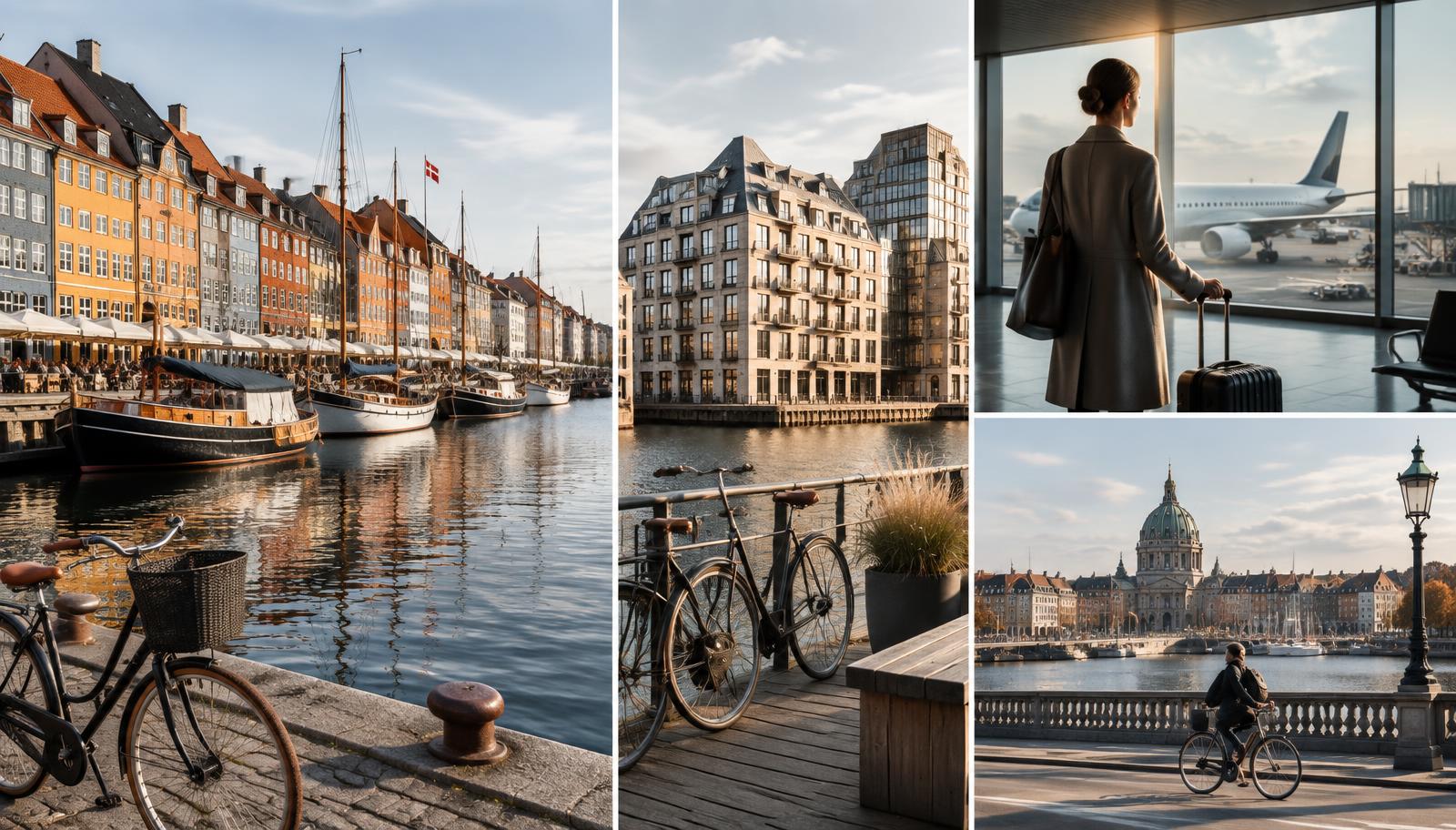
For a trip including Denmark, the first border crossing does not always determine where to apply. Learn how the main purpose, length of stay and supporting itinerary documents identify the responsible Schengen country.
If your trip includes Denmark and other Schengen countries, the country where your flight first lands does not automatically decide where you should apply for a visa. The starting point is whether you have one destination or several. For a multi-country journey, identify the main destination by the length or purpose of the stay. Only when no main destination can be established does the country whose external Schengen border you will cross first become the deciding factor.
Your documents should make that choice understandable. Accommodation dates, invitations, transport arrangements and the application form need to describe the same genuine journey. This guide separates the official rules from practical preparation advice and uses examples involving Denmark to explain the distinction. For the broader country-specific application framework, see the Denmark visa information. The objective is to identify the authority responsible for your actual trip, not to redesign a paper itinerary around a preferred application channel.
Apply the main-destination rule in the correct order
Official framework: Under the Schengen rules explained by the European Commission, a trip with only one destination falls under the responsibility of that Member State. If the journey includes several destinations, the responsible state is the one constituting the main destination in terms of the length or purpose of the stay. If a main destination cannot be determined, responsibility falls to the state whose external border the applicant intends to cross first when entering the Schengen area.
This sequence matters. Flying through another Schengen country on the way to a holiday spent entirely in Denmark does not, by itself, turn the connection country into the main destination. Equally, describing Denmark as your preferred country does not establish responsibility if the actual journey points elsewhere. The assessment follows the substance of the itinerary rather than a label on the covering letter.
Preparation advice: summarise the actual journey first
List each country, the planned dates and the reason for visiting it before selecting an application channel. If you return to the same country later in the trip, show both visits and its total planned stay. This makes the comparison clearer and reduces the risk of overlooking a substantial part of the journey. Appointment convenience should not replace this initial assessment.
Consider length of stay alongside the purpose of travel
For a journey with the same purpose throughout, the relative duration of visits is a central way to identify the main destination. A holiday involving six nights in Denmark and three in Germany ordinarily points to Denmark on duration. However, hotel nights are not a complete substitute for an accurate calendar. Arrival and departure dates, day visits and overnight transport should also be visible so that the real distribution of the stay can be understood.
Where purposes differ, a shorter visit may constitute the main reason for travelling. A scheduled professional event in Denmark, followed by tourism elsewhere, requires an assessment of that underlying purpose. An invitation or registration can support the explanation, but no meeting automatically outweighs every other part of a trip. The overall circumstances and the supporting documents remain important.
Preparation advice: connect each purpose to evidence
- For tourism, show accommodation and a credible sequence of destinations.
- For an event, align the programme, registration and relevant travel dates.
- For a private visit, explain the host relationship, address and intended visit period.
- For mixed travel, explain why the journey is taking place and how the additional visits fit around its main purpose.
A document should substantiate the real journey rather than introduce an artificial reason for applying through Denmark.
Use first entry only when no main destination can be identified
Equal stays do not automatically make first entry decisive: first check whether the purpose distinguishes one country as the main destination. If Denmark and Sweden have equal-duration tourist visits and neither has a stronger purpose-based role, the first external Schengen border crossing determines the application country. A journey beginning with direct arrival in Copenhagen may therefore differ from one beginning in Stockholm. The Sweden visa information is relevant when comparing a genuinely balanced Denmark–Sweden itinerary.
The first border crossing is not necessarily where your first hotel is located. On a typical flight from outside Schengen to Frankfurt followed by a connection to Copenhagen, entry into the Schengen area occurs in Germany. Nevertheless, if Denmark is clearly the main destination, that German entry does not transfer responsibility for the visa application to Germany.
Preparation advice: distinguish entry from airport transit
Check the complete transport route rather than just the final airport printed on a booking summary. Remaining in an international transit area differs from entering Schengen. Separate tickets, baggage collection and terminal arrangements can affect the transit requirements. Any airport transit visa requirement also needs its own check; it is not the same question as which country should examine a short-stay visit application.
Identify the responsible country and then the correct application location
The country responsible for your trip and the place where you submit the application are related but separate questions. Once the responsible Schengen state is identified, applications are generally made to its competent consulate for the place where you legally reside. Being lawfully present somewhere is not necessarily the same as residing there. An application by someone legally present but not resident may require justification, and the applicable acceptance conditions should be checked with the competent authority.
An authorised external service provider does not allow applicants to choose a country independently of their itinerary. In some locations, another Schengen state may represent Denmark for visa matters. Where representation exists, its scope should be verified for your location and application category. The office accepting the documents and the country constituting the main destination should not be confused.
Preparation advice: make two separate checks
- Determine which state is responsible under the destination rules.
- Find that state's competent consulate or official submission channel for your legal residence.
- Check the current document instructions for that location and travel purpose.
Submitting to a convenient but non-competent authority can result in the application not being examined there and the applicant being directed to the appropriate authority. A paper itinerary that differs from the intended journey does not resolve that problem.
Build an itinerary that is supported by consistent documents
Consistency means more than repeating the same city names. The documents should describe a journey that works in time and geography. Overlapping hotel stays in distant cities, accommodation beginning after an event has ended, or an unexplained gap between countries can make the plan difficult to follow. Correct mistakes before submission and explain genuine arrangements that might otherwise appear contradictory.
Practical preparation advice: A one-page itinerary can connect the evidence without replacing the official document checklist. It is a useful organisational tool, not a universal mandatory document. Keep it factual and avoid adding unnecessary promises about activities that are not actually planned.
- Dates: Show arrival, departure and accommodation periods.
- Location: Identify the country, city and actual accommodation address.
- Purpose: State whether the visit concerns tourism, an event or a private visit.
- Transport: Explain flights, trains, ferries or road travel between countries.
- Evidence: Identify the booking, invitation or programme supporting each stage.
Compare names and passport details across the documents as well. If travelling companions have different return dates, make clear whether that difference is intentional. Read booking payment and cancellation conditions separately, and distinguish refundable arrangements from financial commitments that will remain payable regardless of the visa decision.
Compare three examples involving Denmark
A longer tourist stay in Denmark
A traveller flies to Berlin, spends two nights in Germany, continues to Denmark for five nights and returns from Copenhagen. If the trip is entirely for tourism, Denmark is the main destination by duration. Entering Schengen through Germany does not change that result. The German portion should still appear in the application documents. The Germany visa information becomes relevant when considering a different genuine itinerary in which Germany is the main destination.
A Danish event followed by a holiday
A three-day conference in Denmark is followed by several holiday days in another Schengen state. The assessment should consider whether attending the conference is the principal reason for the journey. Registration, the programme and relevant employer documentation can explain that relationship. Adding an incidental event booking does not automatically make Denmark responsible for a trip whose actual substance lies elsewhere.
An evenly balanced tourist itinerary
A tourist plans equal stays in Denmark and another Schengen country, with no purpose-based distinction between them. The first external border crossing then becomes relevant to responsibility. If the plan subsequently changes so that the other country has a substantially longer visit, the earlier choice should not simply be carried forward. Reassess the current itinerary before submission rather than relying on the original draft.
Handle itinerary changes and check current official requirements
Genuine plans can change because transport is cancelled or an event moves. A change does not automatically mean that an issued visa becomes invalid, but its nature and extent matter. If the main destination shifts, the purpose changes or the submitted documents no longer explain the journey, seek instructions from the authority examining the application or the issuing authority. Significant changes during a pending application should also be reported.
A valid visa does not remove the separate assessment of entry conditions at the external border. Travellers may be asked to explain the purpose and conditions of their stay. Keeping updated accommodation details, onward or return arrangements and relevant financial evidence accessible is practical preparation. Read the visa's validity dates, permitted duration of stay, number of entries and any territorial restrictions separately.
Greenland and the Faroe Islands are outside the Schengen area. Do not assume that an ordinary Schengen visa alone authorises travel there. An itinerary involving either destination requires a separate check of the relevant entry conditions and permission needed.
Official sources and current check: For this article dated 24 September 2026, consult the Danish Ministry of Foreign Affairs application-location guidance and the European Commission's Schengen application rules. Verify current document lists, representation arrangements, fees and submission procedures with the named authorities rather than treating administrative details as fixed.
Consultation on application-country choice and itinerary consistency
Hermes Vize can review how the stated main destination relates to the itinerary and supporting documents. Such a review can identify unclear dates or explanations, while responsibility for examining the application and deciding it remains with the competent authorities. A route summary, accommodation details and evidence of the travel purpose provide a practical basis for that review.