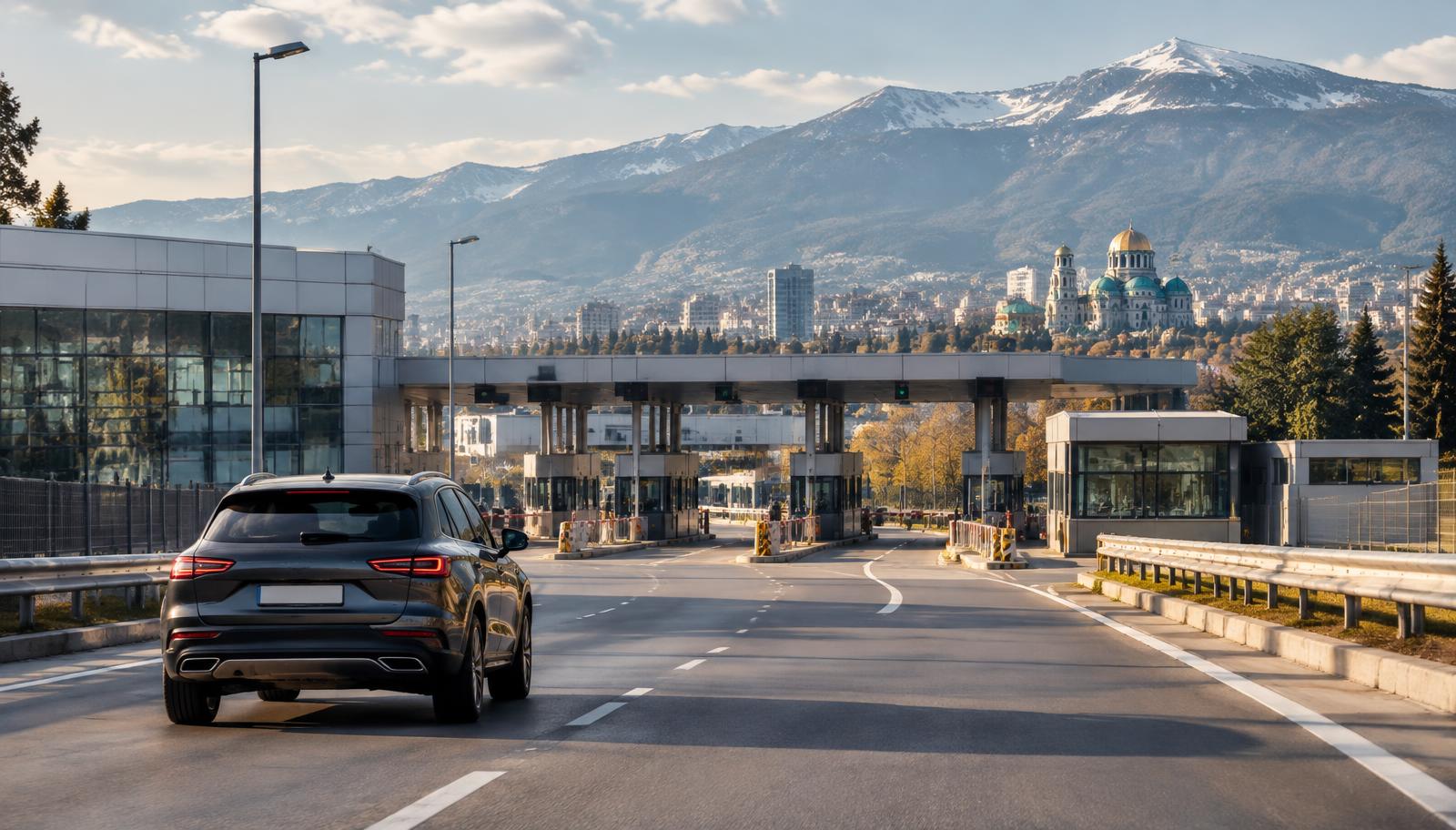
Plan a road journey through Bulgaria with a clear view of Schengen visa rules, the main destination, border documents and vehicle paperwork. Understand which country should handle your application.
A road journey through Bulgaria requires two connected plans: a credible Schengen itinerary and a practical set of border and vehicle documents. A valid visa does not remove the possibility of questions about your accommodation, finances, travel purpose or return arrangements. Keep the evidence behind your journey accessible rather than treating the visa sticker as the complete travel file. For travellers leaving Türkiye, the distinction between the external border into Bulgaria and subsequent internal Schengen crossings is particularly important.
The country you enter first is not automatically the country that should handle your visa application. Bulgaria might be your main destination, an overnight stop or simply the route to a longer visit elsewhere. The correct application country depends principally on the purpose and duration of the trip. This guide concerns short-stay Schengen travel; residence permits, national long-stay visas, family-member rights and special passport categories require separate checks. Vehicle admission, driving permission and customs obligations must also be considered independently of a passenger’s visa status.
What Bulgaria’s Schengen status means for road travel
The factual position: Internal air and sea border checks with Bulgaria were lifted on 31 March 2024, followed by internal land border checks on 1 January 2025. A direct journey between Bulgaria and Greece or Romania therefore crosses an internal Schengen border. The Türkiye–Bulgaria crossing remains an external Schengen border, where authorities examine entry conditions. Customs procedures and checks concerning vehicles or goods are separate from the visa assessment.
The removal of routine internal border checks does not mean documents can be left at your hotel. Temporary internal border controls may be introduced, and police or traffic checks remain possible. Carry your passport and relevant visa or residence document throughout the journey. Also remember that membership of the European Union and membership of the Schengen area are different questions when assessing a route.
Official source/current check: For planning dated 24 September 2026, check Schengen coverage, temporary controls and current border arrangements through the European Commission’s Schengen, Borders and Visa pages. Confirm Bulgaria’s application requirements with the Bulgarian Ministry of Foreign Affairs visa guidance. This article does not verify live operating conditions at any particular crossing.
How the main-destination rule determines where to apply
If your journey has only one Schengen destination, that country handles the application. Where several countries are involved, the competent country is the main destination in terms of the length or purpose of your stay. Only when no main destination can be established does the first country whose external Schengen border you intend to cross become decisive. First entry is therefore a fallback rule, not a general choice of application country.
Three itinerary examples
- Six tourist nights in Bulgaria and two in Greece: Bulgaria is ordinarily the main destination if there is no different overriding purpose.
- One overnight stop in Bulgaria and seven holiday nights in Greece: Greece would normally handle the application, despite entry through Bulgaria.
- Equal stays in Bulgaria and Romania for the same purpose: If nothing else establishes a main destination, entering the Schengen area through Bulgaria can make Bulgaria competent.
Counting nights is useful, but it is not the entire assessment. A professional event, family visit or other specific commitment can explain the principal purpose of a wider trip. Present the invitation, event schedule and travel explanation together where the purpose is decisive. Do not describe a minor stop as the central visit simply because applying to that country seems more convenient.
Preparation advice: Build a table listing each country, arrival date, departure date, overnight stays and purpose. Distinguish departure from Türkiye from entry into the Schengen area. Where Bulgaria genuinely is the main destination, the Bulgaria visa information page provides a relevant starting point for organising the country-specific application file.
Check territorial validity, entries and permitted stay separately
A short-stay type C visa issued by Bulgaria and valid throughout the Schengen area generally permits travel to other Schengen countries within its conditions. However, not every visa has identical territorial coverage. Read the territory covered, validity dates, authorised duration of stay and number of entries as separate restrictions. A visa with limited territorial validity should not be treated as permission to visit every Schengen country.
The 90 days in any 180-day period rule is a rolling limit for short stays. Previous Schengen visits count, and travelling from Bulgaria to Greece does not restart the calculation. Both entry and exit days are included. If the visa authorises fewer days, the general 90-day ceiling does not increase that allowance. Likewise, unused days do not extend the visa’s expiry date. Check all these limits against the complete itinerary.
Why a route outside Schengen changes the calculation
Driving directly from Bulgaria into Romania is different from driving through Serbia before entering another Schengen country. The latter route involves leaving and re-entering the Schengen area. Once a single-entry visa has been used and you have left, remaining authorised days do not normally allow another entry on that visa. The non-Schengen country’s own entry or transit rules must also be met.
Entering Bulgaria with an appropriate, valid visa issued by another Schengen country is not inherently a breach of the rules. Nevertheless, substantial differences between the application itinerary and the actual journey may require explanation. Keep evidence of genuine changes, such as an event cancellation or revised accommodation. A legitimate change after issue is different from presenting an inaccurate itinerary when applying.
Documents that may matter at the external border
For a short visit, the general passport rule requires a document issued within the previous ten years and valid for at least three months after the intended departure from the Schengen area. Visa-required travellers must also hold the appropriate valid visa. Border authorities may examine the purpose and conditions of the visit, sufficient means of support, and return or onward arrangements. Holding a visa does not exempt a traveller from those entry checks.
Preparation advice: Keep offline digital copies and suitable printed documents where they can be retrieved easily. A flat phone battery or poor mobile connection should not prevent you from showing the hotel address or return plan. Each traveller should have access to their own evidence rather than relying entirely on the driver’s phone.
- Passport, visa and any relevant residence document.
- Accommodation bookings or clear host details matching the travel dates.
- A short itinerary showing country order and the intended return journey.
- Current evidence explaining how travel costs will be covered.
- Travel medical insurance and any relevant invitation or event documentation.
Answers at the border should be accurate, concise and consistent with the actual journey. If the main holiday is in Greece, do not describe Bulgaria as the location of a lengthy stay merely because you are entering there. Each passenger’s nationality, documents, previous stays and entry conditions are assessed individually. Complete paperwork for the vehicle does not resolve a passenger’s missing visa or exhausted stay allowance.
Prepare a separate vehicle, driver and insurance file
Visa documents and the vehicle’s international travel paperwork serve different purposes. Check the registration certificate, driving licence and motor insurance valid in the countries on your route. Where a Green Card is used, examine its territorial coverage and validity dates. Travel medical insurance does not replace motor liability insurance, while vehicle insurance does not provide the traveller’s medical cover. Overseas breakdown assistance and comprehensive cover depend on the policy terms.
Borrowed, company-owned and rental vehicles
Additional evidence of authority to use the vehicle may be required when the driver is not the registered owner. A rental agreement does not automatically permit travel into every country. Check cross-border permission with the rental company, and establish the scope of any company authorisation or private owner consent. Requirements for powers of attorney, translations or certification should be checked for the actual circumstances rather than assumed to be identical across all routes.
- Compare the registration details with the number plate and vehicle identity information.
- Check recognition of the driving licence and whether supplementary documentation is needed.
- Confirm that the owner’s permission covers every country to be visited.
- Ask the insurer about territorial exclusions and the procedure after an accident.
- Check tolls, electronic vignettes and vehicle classification with the relevant road authority, including Bulgaria’s Road Infrastructure Agency.
Customs obligations for belongings, cash and temporary vehicle admission are distinct from visa rules. Consult the Bulgarian Customs Agency and the relevant Turkish customs authority for current requirements. Borrowed vehicles, goods that could be considered commercial and significant cash holdings deserve particular attention. Do not assume that a document accepted for one administrative purpose also satisfies a different authority’s requirements.
Build the application around the journey you actually intend
A useful application file explains the trip rather than merely increasing the number of documents. The form, accommodation records, employment or study evidence, financial records and itinerary should support the same dates and purpose. For road travel, explain how the journey will take place instead of adding an irrelevant flight reservation. The responsible consulate’s current checklist may require further evidence according to the applicant’s circumstances.
- Describe the route: Identify the departure city, intended crossing, overnight stops and return route.
- Identify the competent country: Assess duration and purpose together before selecting the application authority.
- Align the dates: Compare leave approval, bookings, insurance and the application form.
- Explain the funding: Account for accommodation, fuel, road charges and normal daily expenses.
- Add relevant vehicle evidence: Prepare registration, permission and insurance documents to the extent requested.
- Perform a consistency check: Compare names, passport numbers, vehicle details and dates across the file.
The responsible consulate is generally the one with jurisdiction over the applicant’s place of legal residence. Being legally present in another country does not automatically establish a right to apply there. Confirm application jurisdiction, accepted document formats, charges and booking arrangements through the competent mission identified by the Bulgarian Ministry of Foreign Affairs. Avoid planning around a fixed outcome date or assumed appointment availability.
Children require an individual review of passport and visa status. Travel with one parent or another adult may require birth records, custody documents or parental consent, depending on the family circumstances and the countries concerned. Keep documents explaining different family names accessible where relevant. A shared family itinerary does not eliminate individual documentation requirements.
Final route checks for Greece and Romania connections
On a journey from Türkiye through Bulgaria to Greece, a Bulgarian transit overnight does not by itself determine application responsibility. If Greece is the main destination, review the Greece visa application framework. Likewise, where the principal visit is in Romania, consult the Romania visa information for the relevant country-specific preparation. Border geography should support the itinerary, not replace the main-destination assessment.
Preparation advice: Before departure, review passport validity, visa conditions, previous Schengen days, accommodation addresses and vehicle insurance together. Check whether a navigation app’s alternative route crosses a non-Schengen country. A shorter drive can introduce a separate entry requirement or make an additional Schengen entry necessary. Save the intended route so that a last-minute diversion is a conscious decision.
A crossing being open does not necessarily mean that it accepts every vehicle category. Confirm applicable crossing arrangements, roadworks and traffic restrictions through the relevant border and road authorities. Rather than relying on a fixed estimate of waiting time, leave flexibility for rest stops and accommodation. This helps manage fatigue and reduces the risk of delays making the documentary itinerary difficult to explain.
Consultation on the itinerary and application file
Hermes Vize can be considered for a pre-application review of the main destination, itinerary consistency and supporting road-travel documents. Such a review does not replace official guidance or the authorities’ assessment; visa and border decisions remain with the competent authorities.